
A lovely Owl
Nothing more.

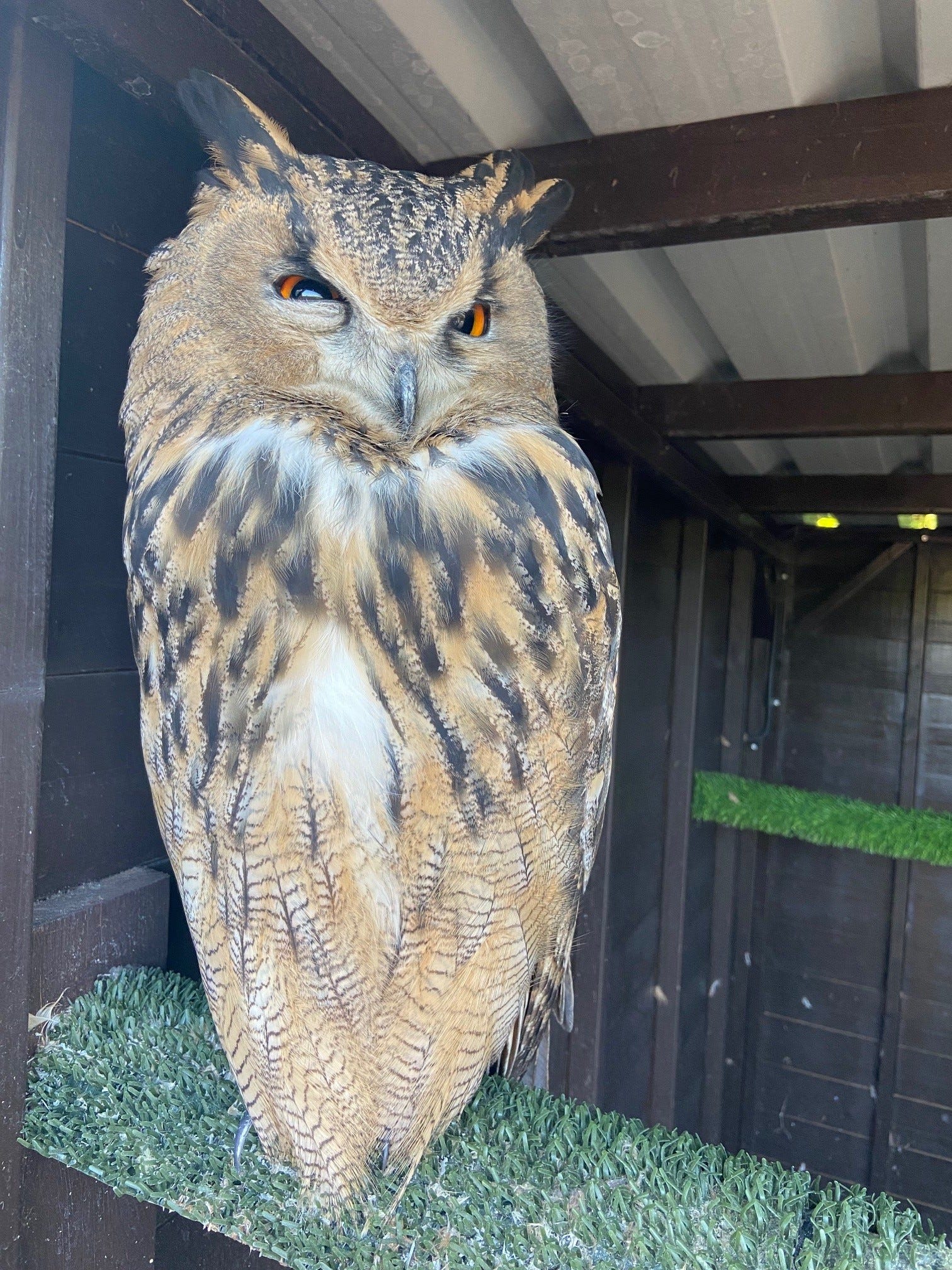
Last week I was on the most amazing call with Ken Murphy the CEO of Tesco. He was hands-down FAB-U-LOUS so I planned to write all about him and his words of considerable wisdom in this blog. However today I am tired, and not in the mood to write anything remotely inspirational. So here’s a picture of a lovely owl. Sorry Ken.
I despise birds. It’s the tiny, black, expressionless eyes. I can’t trust them. But give me an expressively wide-eyed owl any day of the week, for they are a thing of absolute beauty. Send me on a date to a cracking owl sanctuary with Alan Partridge and I would be in actual heaven. This one is some kind of gourmet owl, who lives in the aviary at Le Manoir in Oxfordshire, which is not a bad spot for owls, or humans.
I went to Google “are owls…” (wise) and the first listing was for “native to France”, which is not what I was expecting. A bit further down was “are owls birds” 🤣🤣🤣Of course they are, you idiots. But thanks to the wonders of Wikipedia I now know that this is because they share all the defining characteristics of the class Aves including feathers, beaks without teeth, laying eggs and a high metabolic rate. They belong to the order Strigiformes which is divided into two families Strigidae (typical owls) and Tytonidae (barn owls). There are roughly 250 species of owls worldwide and they are found on every continent except Antarctica.
Beaks without teeth. I have never, ever thought about this in my life. But obviously I then had to disappear down a rabbit hole of discovery of the animals that do have both beaks AND teeth. The alligator snapping turtle, the black spotted puffer fish, the platypus and even my all-time favourite animal the octopus which is a rare example of an invertebrate with beak-teeth combo, as it apparently has a chitinous beak with mandibles (whatever they are) that act like teeth to tear prey apart.
I didn’t know what chitinous meant, but apparently it’s the adjectival form of chitin. No idea what that is either, but now of course I do. It is a fibrous substance consisting of polysaccharides, which is the major constituent in the exoskeleton of arthropods and the cell walls of fungi.
Anyway, back the the owl-based googling, where I was hoping for a tenuous link to wisdom that would render them a suitable kick-off point for a leadership and coaching blog to ramble on for a bit about what true wisdom is. Or something.
Anyway, I was disappointed to find that owls are apparently not inherently wise; their reputation for wisdom comes from cultural symbolism rather than superior intelligence. Something about the Goddess Athena, navigating in darkness as mystical insight, their contemplative appearance, visual and auditory acuity, Roman and thence Western iconography and academic logos, then endless references to Harry Potter. So their cleverness is mere social construct.
But there is a variety called a “burrowing owl” that is able to use primitive tools. New Screwfix customer segment incoming and mind officially blown. 🤯🤯🤯
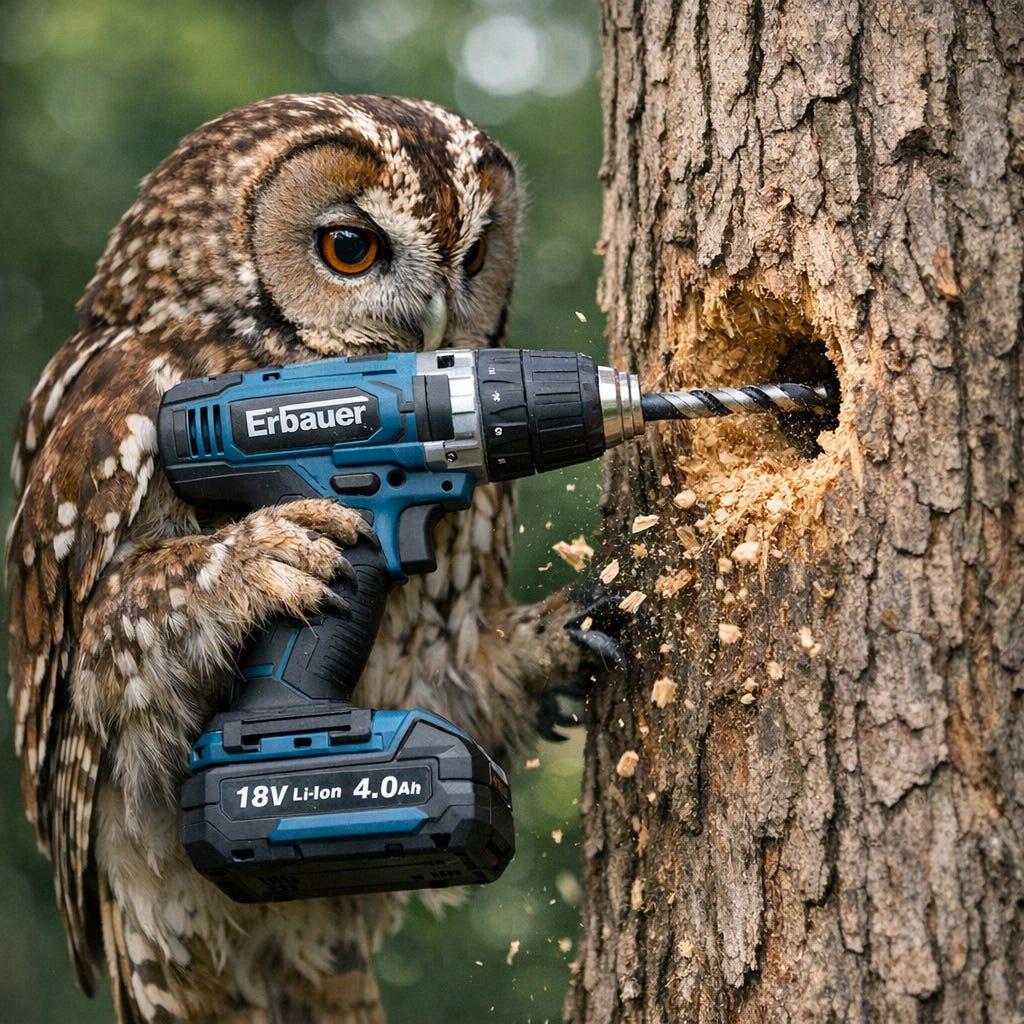
Before you blow up in the comments, I know, I know…..any burrowing owl worth its beetles wouldn’t be seen dead with an 18v Erbauer. Whatevs.
Turns out all the burrowing owls actually do is use dung to lure their prey (helpfully, the dung beetle) to their death.
So there you go. Next week, inspirational leadership thoughts from Ken. Just don’t tell him that his successful market-share growing tenure is mostly built off the back of my Tesco Finest NZ Sauvignon and Dairylea Lunchables habit.